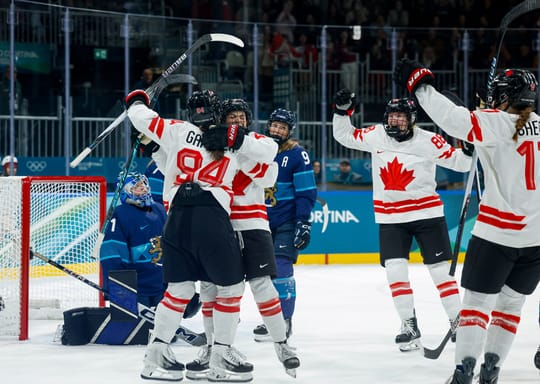


Read up on the tournament basics here and check out our team previews linked in that article. Catch up on the first two days of games here.
There's been a lot of hockey in a short period of time and we try to touch on it all, so let’s dig into what surprised us, what stood out and what you need to know about what has happened so far.
7 February 2026
The third day of games went off as planned, and the norovirus outbreak appears to have been contained.
Germany vs. Japan: 5-2 Germany
Kirsten: I’ll be honest, I don’t feel like I’ve processed much about Japan’s play so far this tournament. Their games have all been perfectly timed for the Japanese audience, which is to say that I am not as awake as I’d like to be when they happen. Arguably, the Japanese players were also not as awake as they’d have liked to be at the start of this one, and wound up down 5-0 by the halfway point. This game was the most important one on their schedule, especially after having lost to Italy, and while they got themselves back into it, a five goal deficit is a tough hole to climb out of.
Germany, meanwhile, had four different goalscorers, and they’ll hope to carry that momentum into the rest of their group games.
Nicole: I feel like Japan is doing about how I expected them to. And while that’s not super exciting, it does show a steady upswing in growth and development. There is now a small group of players that play professionally outside of Japan and I think that’s a necessary step if they are going to push themselves out of the middle/bottom of this top group of senior women’s squads. If everyone just stays playing domestically in Japan, they’re going to stagnate.
I like how they’ve integrated some of the younger players and I have seen some flashes of how that will play out in the future, but it is telling that right now Akane Shiga is far and away the most well-rounded and dangerous scorer they have.
Sweden vs. Italy: 6-1 Sweden
Kirsten: Obviously, the Swedes are the class of Group B, and they’ve played like it. But I was impressed to see Italy maintain its structure for the full 60 minutes despite Sweden’s dominance. I think that says something really positive about the group, and it’s something I know they were focused on in their preparations. Sweden was plain and simply the better team in this game, but despite being clearly outmatched, the Italians didn’t look like they were scrambling.
Nicole: I agree and I think it’s a testament to the games they played over the last year. Teams have to learn how to face adversity and how to lose and not let it throw them. That can only come from experience.
Sweden looked like the team I wrote about expecting to see in my preview. There is simply too much talent on this roster for them to not be pushing for a medal and I thought we saw that on display here. Thea Johansson was a standout for me in this game. She played the start of her college career at Mercyhurst, but transferred to Minnesota Duluth this season and was getting more and more involved before she left for the Olympics. She was sort of the main focus in Erie, but has become a part of a more team-driven offensive effort at UMD and that has improved her game.
Kirsten: I’m really looking forward to Sweden’s quarterfinal, but I’m also preemptively frustrated about it. Sweden is just so much better than its Group B opponents at these Olympics, and it puts them at a disadvantage when trying to prepare for the sudden competitiveness of a must-win quarterfinal against a comparable team. They haven’t been properly challenged in this tournament, and with everything on the line they’ll have to face a team that’s been playing competitive matches the whole time. I really hope they can play to their potential, whatever the outcome may be.
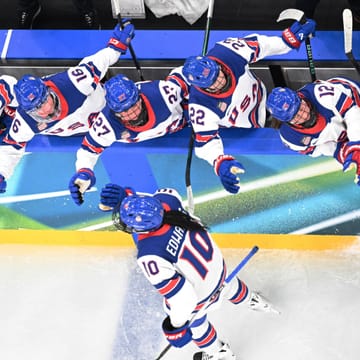
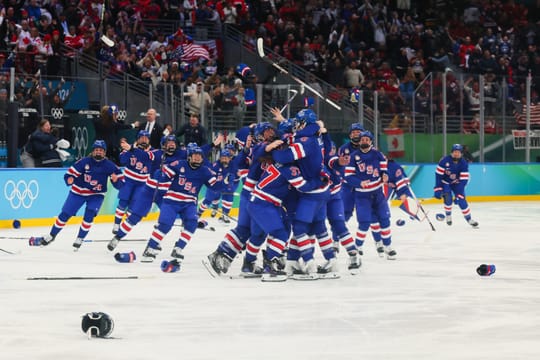
USA vs. Finland: 5-0 USA
Kirsten: The U.S. dominated this game, but I thought Finland was more in it than the 49-11 shot count would suggest. I’ve been a little less high on Finland this year and if you had asked me before the tournament to predict a score for Finland-USA, this is about where I would’ve landed. But I can’t help but wonder how much the norovirus outbreak impacted their energy levels, and how much to read into these games as a result. If this was the Finns at half strength, then they may well be able to post an upset in the knockout round.
Nicole: I’d agree that I was probably a little down on the Finns as well, partly connected to the disappointment at U18 Worlds and partly because I’m just higher on other teams. Your point about what they could have done if they were at full strength is a good one. Some of the goals came when the Americans exploited small breakdowns. Or like Hilary Knight’s goal, when she just outskated everyone on defense. No offense to Hilary, but I’m not sure that happens with a fully fit Finn team.
Kirsten: You mentioned the U.S. powerplay last time around, and in this one too I wasn’t quite sure what to make of it. It sometimes felt like they were trying to be crafty, or maybe show some fancy set plays, but the execution looked unpracticed and led to giveaways and easy clears for the Finns. At other times, the passing was nice, but no one was moving their feet. You can see the building blocks of something beautiful and lethal, though.
Nicole: I like the sound of that but also wonder if the tournament is long enough to figure it out. That being said, there was definitely at least one power play where it was four collegians and Taylor Heise on the ice. Maybe the staff is looking to mix things up because it wasn’t clicking. Maybe it was about getting them more experience. Time will tell, but I thought it was both notable on its own and in the context of how limited the younger players were in 2022. The contrast was stark.
What I like that I’ve seen so far from the US is that it feels like they’ve got a good balance of sticking to the system or the plan or however you want to put it, but also have the freedom and confidence to play a little free when needed or possible. I just think things can get too tight and strict at times in these high pressure situations and it doesn’t leave room for the best players in the world to, you know, be the best players in the world.
Canada vs. Switzerland: 4-0 Canada
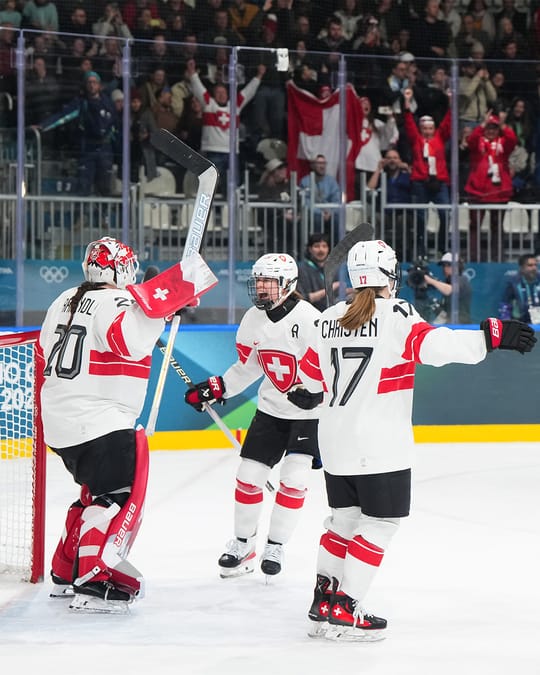
Kirsten: Much like in their opener against Czechia, I thought the Swiss did an excellent job of disrupting their opponent. It’s not necessarily pretty hockey, but it’s been effective. They’re getting sticks in lanes, showing good defensive positioning, and racing to every board battle. Switzerland only totaled six shots in this one, so the defensive persistence came at a cost, but the opportunities the Swiss did get were dangerous enough that they gave themselves a real chance at an upset.
Nicole: The best part about this was the conversation on the broadcast and online about Saskia Maurer. Andrea Brändli has definitely been the more recognizable member of this goalkeeping group, but Maurer was battle-tested at St. Thomas early on in the team’s transition to Division I and she’s proving that she’s up to the challenge. In 32 games played for the Tommies she had 12 outings with 35 or more saves. Her career high was 60 saves against Wisconsin as a rookie. She averaged 34 saves a game. Basically, none of what she saw in this game was anything she hadn’t faced.
Kirsten: Yeah, she’s been excellent for quite some time and I’m glad to see her playing to her potential and getting recognition on this stage.
Perhaps the biggest question for Canada will be figuring out its offence. Shots were 30-3 in Canada’s favour after two periods, but with only one goal to show for it. Part of that is a credit to the Swiss, but the Canadians were consistently taking shots from far out, or letting off weak shots into traffic, instead of looking to find or create a better option. There’s always a balance to be struck between waiting for the perfect lane and simply shooting the puck, but Canada hasn’t found it. A lot of good plays to maintain possession wound up going to waste when a low-danger shot inevitably wound up on a Swiss stick. I would’ve liked to see them try to get inside more.
That said, I do think it’s promising that the Canadians never panicked. It can be easy to let a game get away from you when nothing’s going in, and with such a narrow lead, it only takes one weird bounce for things to turn. Canada stayed composed and stuck to its systems, and it paid off in the third.
8 February 2026
France vs. Sweden: 4-0 Sweden
Nicole: It might be unfair, but I look at France and all I see is that they could have done something like Italy, but didn’t and it shows. That being said, I feel like the French approach to this may have just been that they really backed into this tournament berth and they’re just taking it all as a learning experience that they can build on heading into their own hosting gig in 2030. It just feels like they’re playing a little too passive. I’d like to see them try some pressure instead of ceding so much ice. They’re very reactionary and I’m not actually sure that’s helping them improve at all.
Kirsten: I do think France has been putting up an admirable performance for a last-place qualifier, and their team is nearly entirely homegrown, which I appreciate. But as you said, it’s clear they aren’t quite up to this level, nor do they have the confidence to play like they belong.
I don’t think the scoreline in this game comes close to reflecting how dominant Sweden was, and that’s despite it having been one of France’s better showings. The most noticeable aspect for me was on zone entries: Sweden consistently made its way into the offensive zone completely unchallenged. France played sound defence in its own zone, but it almost looked like the French didn’t even try to prevent Sweden from getting there in the first place. Perhaps that was intentional, though – I’m not sure they would’ve succeeded much.
To your point about pulling off something like Italy, it’ll be interesting to see how they approach 2030. France has three Canadian players this year; two with French family ties and one without, who was recruited specifically in view of these Games. I don’t necessarily love the idea of naturalizing athletes with no prior connection to the country just for the sake of improving a national team, and I wonder if the roster we see in the French Alps will feature as many players raised in France as this one.
Czechia vs. Finland: 2-0 Czechia
Kirsten: This is consistently one of the best match-ups in hockey, as far as I’m concerned. And Natálie Mlýnková sure is having herself a tournament! Although it was fairly evenly matched, I did feel like we were playing Czech hockey in this one. Finland had its moments, but certainly wasn’t dictating the game. The biggest question I came away from this one with is whether the Finns can find some scoring before the preliminary round is out. And of course, I’m also still left wondering how well the Finnish team has returned to form and whether we should be reading anything into these group matches at all. If this is Finland at full capacity, that tells me something very different than if they’re playing like this while still recovering their strength.
Nicole: Mlýnková has grown so much as a player over the past two seasons or so. You could see the threads of what could be, but I don’t know that she fully believed in it. But steady playing time and scoring has seemed to really build her confidence. She’s also really found the physical side of her game. She’s not the biggest player, but she is really solid in skates, making her difficult to push off the puck. She has leaned into that and uses that with her skating to angle in and get goalside of defenders.
Something I’ll be watching in the game against Switzerland is faceoffs. I’d expect the US to win that battle, but I don’t love the numbers against Czechia (Finland was -16). If that continues against the Swiss, it becomes a problem and would certainly help explain the lack of scoring. Puck possession is only going to get more difficult as the tournament proceeds.
9 February 2026
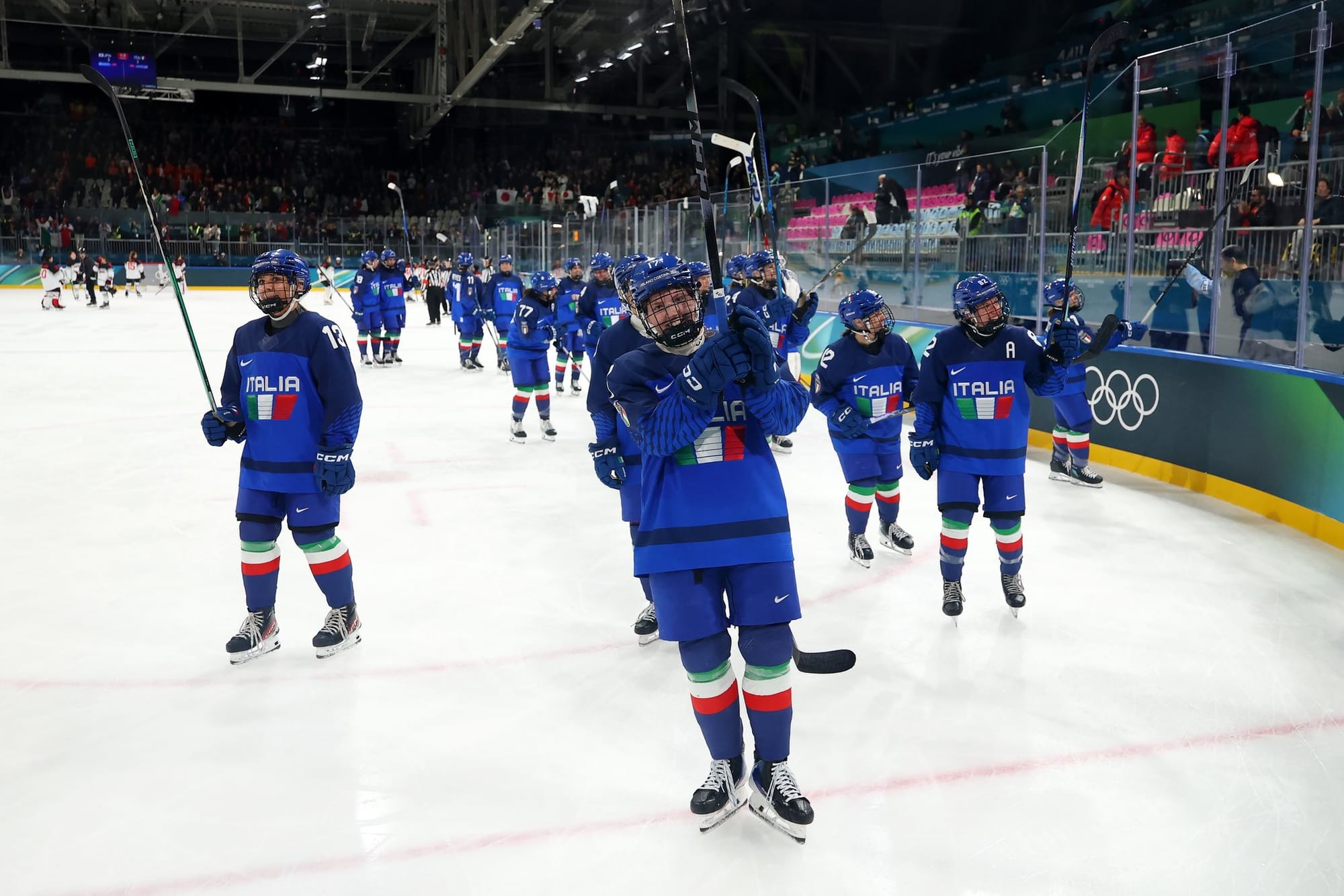
Japan vs. Italy: 3-2 Italy
Nicole: It didn’t seem right to put this bit before our analysis of their loss, but I just want to applaud you again for your great preview of Italy before these games. It seems like nearly everyone else wrote them off, but you saw that there was more than meets the eye to their roster. Well done.
Kirsten: Thank you! I have had to seriously restrain myself from yelling “I told you so” at every opportunity. It’s always validating when a team proves that you do, in fact, know what you’re talking about. I think this was another good example, too, of playing a focused game and sticking to their style. Japan had a monster second period and the Italians didn’t crack under the pressure.
Nicole: Matilde Fantin has really made an impact in this tournament. She’s someone I was aware of on Penn State, but she’s on the third line behind some very talented skaters and it’s always a little hard to gauge the relative level of PSU when they’re overwhelming everyone in their league. But I like how she has used her size and she clearly has an instinct for the net front. On a team of really experienced and talented older skaters, she’s still finding her spot and being impactful. From a collegiate lens, PSU is going to need skaters to really step up because of who is graduating this season and she seems primed to fill one of those roles.
Germany vs. France: 2-1 Germany in OT
Kirsten: France knew this would be their last game of the tournament, so they were playing for pride and to end their Olympics on a strong note. They didn’t quite get the result they wanted, but I think they can be pleased with their performance here. I mentioned before that I thought Germany was a winnable game for them, and I think they showed a lot more confidence in this one. You could tell they really wanted to come away from Milan with a win, and at least they got themselves a point.
Germany was the better hockey team, but France had solid goaltending from Alice Philbert and, importantly, played like they wanted to win. We discussed earlier how the French team often seemed too passive in this tournament, but I thought they did a much better job of staying on Germany, which paid off when Manon Le Scodan recovered the puck from a German interception and got it to Estelle Duvin to tie things up.
Nina Jobst-Smith was able to pick her spot and call game in overtime, keeping the Germans’ quarterfinal hopes in their own hands. Both Lilli and Luisa Welcke got assists on the winning goal, and I have to shoutout the Welcke fans in the stands: incredible wigs. I am very sorry that I cannot find a picture, so you’re all just going to have to watch Germany’s next game to see for yourselves.

Nicole: The fact that Svenja Voight, who also has springy, tight curls, is on the Welcke’s line and has been in all their social media like she’s a triplet brings me so much silly joy.
Anyway, I had said in my preview that we’ll know Germany is doing ok against opponents if Jobst-Smith is able to get involved on offense and this is the second game where she’s had an impact and gotten on the score sheet. She’s their best defender and would be an important part of the team if that’s all she did because she’s so calm and doesn’t get drawn in easily. But she also has a great shot and can be a game-changer from the blue line, not just on her own, but finding lanes and setting up her teammates.
Switzerland vs. USA: 5-0 USA
Nicole: The younger players continue to shine for the Americans. Joy Dunne and KK Harvey each had a goal and two assists. Haley Winn opened the scoring. Harvey scored with some gorgeous stick handling driving the net. With as good as Switzerland has been in net, the USA was most successful when they were able to get to the net front.
I liked that they didn’t seem to get frustrated by the tough Swiss defense and they didn’t get stuck in the rut of trying the same thing over and over and expecting it to suddenly work. They moved the puck well and cycled the zone - particularly that Abbey Murphy/Taylor Heise line - looking for lanes and openings.
Kirsten: I admittedly was very in-and-out of this game, on account of only having so many screens (and eyes) at my disposal. There were two hockey games going at the same time as the rhythm dance, and ice dance is a sport I follow closely, presumably as a form of penance for some as-yet-unknown sin. It is regularly infuriating, and yet I keep coming back.
I did get to closely watch some of it, though, and it’s clear the Swiss have found their game plan and are sticking to it. As I mentioned when we discussed Canada’s meeting with them, as well as their game against Czechia, they’ve been doing a very good job of clogging lanes and keeping opponents to the outside. I saw after the fact that Switzerland got way more shots against the U.S., though – were they able to sustain any offence?
Nicole: I’d assume that the blueprint didn’t change much from their game to Canada to this one. And the way they kept Canada at bay for two periods had to give them confidence. Offensive depth is an issue here, meaning they have to be solid on defense to even have a chance to win a game. They’re not going to put four or five goals up, so tight defense where they limit shots, push teams to the sides and stay calm is absolutely necessary. I don’t know if the spotlight is helping teams lock in, but I feel like we’ve seen a lot of really good, calm play from teams in tough matchups.
While they did have many more shots this game, there wasn’t much in the way of sustained offense and that’s where things break down. I said this on social media, but watching Switzerland in this tournament is a bit like having deja vu. We’ve seen stellar goaltending performances from Swiss goalies for as long as I’ve been watching and Sakia Maurer and Andrea Brändli are following in that tradition. But what Switzerland still hasn’t been able to figure out is how to have consistent puck possession or zone time. They have had Lara Stalder and Alina Müller who win pucks and take off in transition and even get some good shots off, but they are rarely supported by trailing skaters and once a shot gets taken, they’re not winning the puck back or holding the zone.
Unfortunately, no player has emerged in at least 12 years that comes close to Alina or Lara. Most of the Swiss team stays playing in Switzerland, even if they go to the NCAA. The level of play there isn’t consistently high enough to continue the development. Ivana Wey is definitely emerging as a possible additional threat, but the team is going to continue to be pretty stagnant if we’re talking about a single player every couple of cycles that can reliably score at this level.
One more thing to mention is that Gwyn Philips looked to be gingerly feeling out her left arm on the bench after some contact. Ava McNaughton went into the game for the final 90 or so seconds and that could have been just to give her the experience, but the timing with Gwyn means it’s something to keep an eye on.
Canada vs. Czechia: 5-1 Canada
Kirsten: Speaking of regularly infuriating, I have a lot of thoughts about the opening period of this game. Namely, the hits: watching the replay, it certainly looks to me that the first point of contact in Kristýna Kaltounková’s hit on Marie-Philip Poulin was the head. The penalty was a 2-minute minor. Not 10 minutes later, Kaltounková laid another high hit (this one also looked to be to the head), this time on Sarah Fillier. Kaltounková was assessed a 2-minute minor on each for an illegal hit; neither was so much as reviewed to consider the possibility of head contact, which carries a mandatory 5-minute major and a game misconduct. Particularly under IIHF rules, I think they ought to have at least taken a look.
As I trust everyone knows, Poulin was spun around awkwardly by the hit, was in visible pain on the bench, and ultimately left the game with an injury to her right leg. Her status for Tuesday, and for the remainder of the tournament, is currently unknown.
After a big hit on the ice, Marie-Philip Poulin will not be returning back to the ice for the remainder of the game against Czechia pic.twitter.com/c3TgsOcaqM
— CBC Olympics (@CBCOlympics) February 9, 2026
I was, however, pleased by Canada’s response. Up 1-0 when Poulin went down, the Canadians jumped well ahead when Filler and Laura Stacey scored just 39 seconds apart. It could be easy to play into the opponents’ hands when something so unsettling happens, but instead of getting into penalty trouble, Canada responded on the scoresheet and led 4-0 by the time the period was over. Julia Gosling, who had two power play goals, said afterwards that she thought the Canadians played smarter with their physical game than the Czechs did, and I’d agree.
Nicole: I didn’t watch much of this one knowing that you'd be prioritizing it, so I stuck with the USA game (and had to drive home from work) and moved over at intermissions.
This is probably not the place to divert conversation about more physical play, but this game really opened up a conversation over on BlueSky about what role fans feel checking should play in the women’s game. I’ll go ahead and put my vote in for regulated contact. I have always liked the finesse and flow of the women’s game - so much so that I have a hard time watching men’s hockey. Much like in basketball, it’s a different game and that’s ok. But I digress and we can maybe come back to that.
Julia Gosling has had a strong start to the tournament. It’s always interesting to see who emerges from a loaded roster like this and it’s a good sign for Canada when one of the younger players carves out a spot.
Kirsten: I am also on team regulated contact. Not to say the officiating is perfect anywhere, but I do feel like the difference between contact rules in the top two leagues (PWHL & SDHL) versus the IIHF has left refs trying to be more lenient with contact and undercalling hits, despite the actual rules, and it’s leaving too much to discretion. I wouldn’t be opposed to changing the IIHF rules, at least at the senior level, to better match, but until that happens I’d much rather they enforce whichever rules are meant to be in force. All that said, hits to the head are illegal everywhere!
Anyways, another thing I liked from Canada was that they did a much better job of working their way inside and waiting for good opportunities to shoot, compared to the game against Switzerland. On the flip side, it’s worth noting that all three of Canada’s even-strength goals came against rookie netminder Julie Pejšová, who was making her first appearance with the Czech senior team. Once she was replaced by Michaela Hesová, the Canadians got two power play goals – one was a 5-on-3 – then were shut out for nearly 40 minutes. So I still have unanswered questions about Canada’s offensive production. Would they have had the same success against Czechia’s starter, Klára Peslarová?
Nicole: I do not understand why Carla MacLeod made this choice for goaltending. There are opportunities to get the third goalie some time (see USA putting Ava McNaughton in at the end of their game with Switzerland) and this is a really odd place to do it for so many reasons, but especially because now Pejšová has a single Olympic memory and it’s getting shelled and pulled.
Kirsten: I suppose the Czechs haven’t really had that same opportunity, to be fair – the game against Finland was tight, and had essentially become a must-win to secure favourable seeding after Czechia’s loss to the Swiss. I’m a big proponent of getting everyone into a game, so I appreciate the intention, it’s just unfortunate for Pejšová that this is how it played out.
Nicole: This is going long so I’ll keep it short, but just wanted to call out Natálie Mlýnková for getting in the dirty areas and spoiling the shutout in scoring for Czechia. I really love her vision and playmaking. She continues to seem to make something out of nothing.
Looking ahead
Tuesday is the last regular-scheduled day of the preliminary round (Canada and Finland will play their postponed match on February 12 to officially end the group stage).
Japan is playing Sweden and Germany faces Italy; Germany holds the tiebreak over Japan, so only a regulation win over the Swedes can keep Japan’s tournament alive. They’d also need Germany to lose in regulation.
In Group A, it’s Canada-USA and Finland versus Switzerland.
Kirsten: Sweden is playing fast, fluid, and fun hockey, but as I mentioned earlier, they’re also playing much weaker opponents. They’ve already locked down the top spot in Group B, so I’ll be interested to see if there’s anything in particular they choose to focus on next game as they aim to set themselves up for success in the quarterfinals.
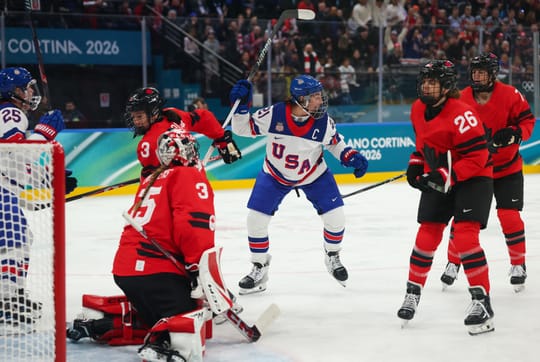
For Group A, unfortunately it doesn’t seem like we’ll be getting a full-strength match-up between Canada and the U.S., so we’ll see how much we learn from it. I imagine the biggest takeaway will come from whether it looks more like the Rivalry Series or Worlds.
I’m really looking forward to Finland-Switzerland. Over the past several years, it hasn’t always felt like the Swiss team has much of an identity on the ice, beyond goaltending. So far here, it’s been all about defence (and yes, goaltending), but I’m looking forward to seeing how they perform against the Finns and whether they can take more control of a game. I’m also keen to see how Finland handles the Swiss structure, which every other team has struggled to break through. The Finns have yet to score a goal in this tournament, so running into a stingy defence will be an important test.
(Photo: Penn State Women's Hockey/X)