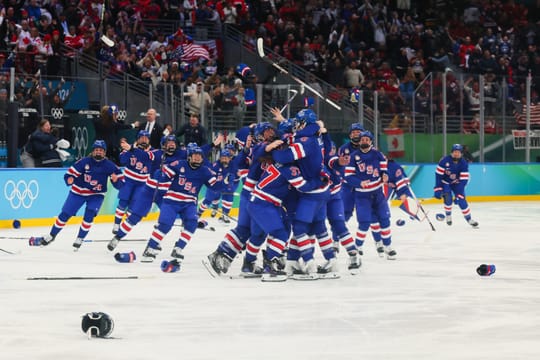
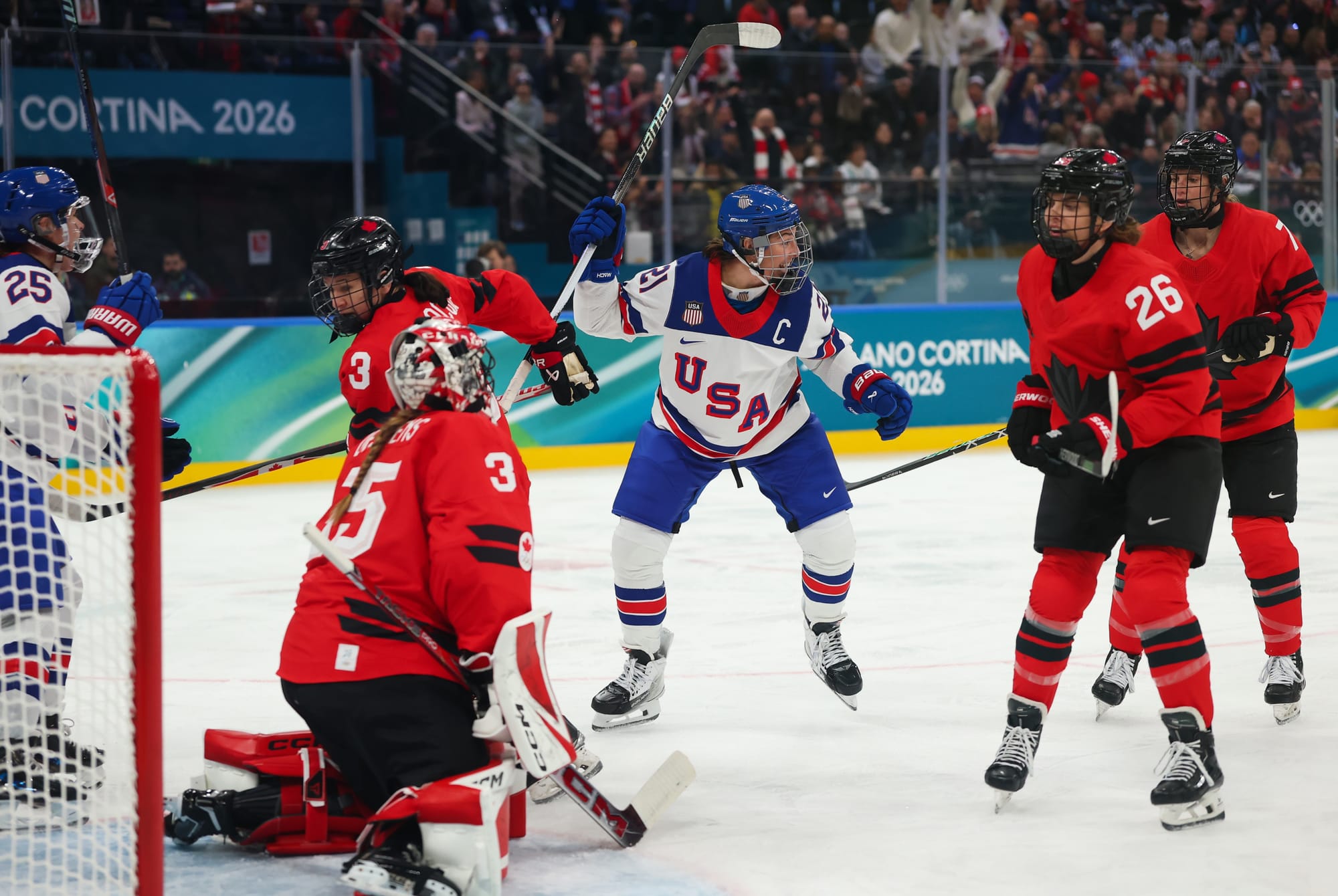


We made it! The bronze and gold medals of the 2026 Olympic women’s hockey tournament will be handed out today.
Gold medal game -
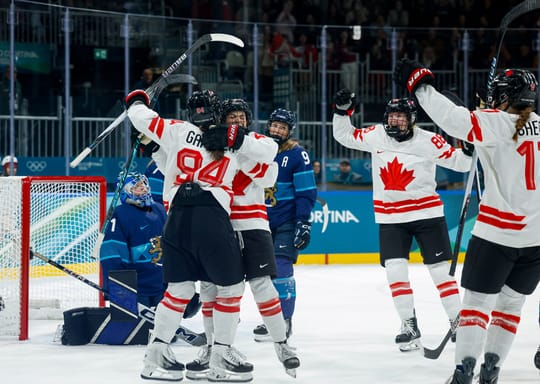
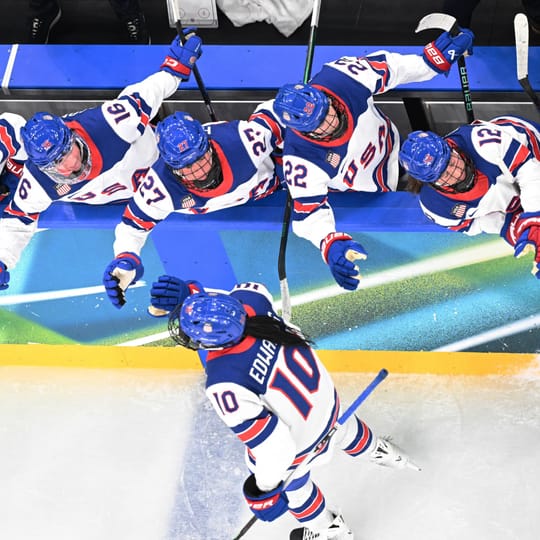
USA vs. Canada
Nicole: We decided to switch things up a bit here at the end. Instead of focusing on recapping the semifinals, we’re looking ahead to the medal games since there isn’t much to take away from those games that we haven’t already pointed out, and I don’t have a lot to say about the US semifinal that isn’t just vitriol for the NBC broadcast.
So.
I hate assuming that the Americans and Canadians will play for gold, but that is where we ended up and once the Games got started, it did feel like where we were headed. The gap between the North American teams and the rest of the world seems to have gotten a little bigger after feeling like it had shrunk about three years ago. But even though the end result was expected, I don’t think we could have foreseen the path that either team, but particularly Canada, took to get here.
The thing I took away from Canada’s win over Switzerland was that I wonder if they would have won if Marie-Philip Poulin wasn’t on the ice? She scored the team’s only two goals, but was clearly struggling at times and was riding the golf cart used to move goalies between the ice and locker room to save her some use and pain in walking on her injured leg.
Canada should be strong enough to handle MPP missing and it's more than a little concerning that they didn’t seem like even they thought that was the case on Monday. There’s just a hesitation and meekness to Canada’s play in this tournament that I’ve never seen before. In the weeks leading into the Games when people asked me about the US win streak, I talked about how I wasn’t sure the results mattered, but that I thought the confidence the US got from it was one of the big intangibles and I think that has borne out. We see a belief from the Americans and how that is missing in the Canadians.
Kirsten: Canada has consistently looked a bit disjointed in this tournament; it feels a bit like a team that relied on chemistry and connection and playing instinctively has come to a point where, due to limited time together, players’ respective instincts just aren’t the same. When you play with the same players all season, within the same systems, you can develop a pretty good idea of where someone’s going to be, get a decent feel for your linemate’s pace across the blue line. In Milan, we’ve seen Canada make a number of no-look passes to nowhere, the kind you make when you’re sure your teammate will be in that spot. There have been countless unforced offsides.
The Canadians haven’t necessarily found a rhythm throughout this tournament the way one hopes to see, and they certainly haven’t looked like the better of these two teams. But that doesn’t really matter now. It’s one game, and this veteran group knows as well as anyone that anything can happen. They’ll need to play like they believe it.
Nicole: You’ve been talking all tournament about Switzerland’s ability to clog the center of the ice and force teams to shoot from the perimeter and they maintained that during the semifinal. Canada just hasn’t looked as offensively dangerous this tournament as we know they can be and while the Swiss defense was good, it wasn’t anything Canada shouldn’t have been able to handle. That they didn’t really find a way to break it down and pick it apart is certainly surprising.
Kirsten: Particularly in the second period, the Canadians actually did quite a good job of getting inside and taking shots from the inner slot. Andrea Brändli definitely deserves some credit here, too. But as I’ve said far more times than I’d like to have to in this tournament, Canada just hasn’t really come together to play cohesively. Poulin took the team on her back to make sure they made it to this final, and it’s going to take the full team channeling that energy.
I did think the Canadian defence did a better job of driving offence, but things still weren’t quite clicking, and they’re nearly out of time to figure out how to make it all work. On that note, I’ll mention that Claire Thompson – who holds the record for the most points all-time by a defender at the Olympics – did not practice on Wednesday and, per Radio-Canada’s Christine Roger, was instead working with the trainer. Not having her at full strength is a big loss for the Canadians, particularly in transition.
Nicole: CBC’s Claire Hanna on instagram said she talked to Troy Ryan and he said it was an upper body injury. They don’t expect it to keep her from the game and were doing some of the work with her that they’ll be doing all game to keep her comfortable and able to play.
I will simply never count Canada out, but I think they’d have to come out looking almost like a completely different team for them to shut down the US.
On the other side of the ice, I thought the US did show a good ability to adapt to what was being given them in the semifinal. Sweden was doing a very good job of angling play and putting pressure on early so they could pinch in and force the Americans to the boards. Unfortunately for Sweden, that focus on pinching left the middle of the ice more open and the Americans took advantage.
The nerves seemed to catch up to the Americans in this game, as they were more jumpy and sloppy and I felt like it lingered past the first intermission. They were throwing the puck towards the net instead of shooting with purpose. With the way Sweden was playing along the boards, a rushed shot was tantamount to a turnover and forced the US to be even more physical along the boards, which is a fight they really wanted to avoid.
I’ll be looking to see how that informs the US approach in this game. It’s inevitable that there will be more nerves, but I feel like puck possession is going to be one of the most important parts of the gold medal game. Canada’s inability to really settle in the zone and find a rhythm is really something the USA can exploit.
In their round robin matchup, Canada did not really have an answer for the US in transition. The Americans had pretty much free movement through the neutral zone and weren’t challenged getting into the offensive zone. Their constant movement has been a hallmark of the US game so far and has made them so dangerous.
Kirsten: I think it’s pretty clear that the U.S. has the edge in this game. They’ve ushered in an exceptionally skilled cohort of young players and done an excellent job proactively integrating them into the senior team over the past four years. A lot has been made of the average age of Canada’s roster by comparison, but frankly, I’m not sure anyone left at home by the Canadians changes much. Lately, there’ve been pundits plucking names off of scoring lists and calling them roster snubs when I’m quite certain most have never seen those players in a game, and it’s hard not to find it disingenuous. When you’re developing young athletes in four-year cycles, sometimes the timing lines up neatly, and sometimes it doesn’t. I give a lot of credit to the folks at Team USA who saw what they had coming and implemented a long-term plan to prepare those athletes for this moment, but I’m not entirely convinced a parallel plan would’ve worked quite as well for the Canadians this time around. I do hope they take some inspiration heading into the next quadrennial, though.
Really, there are some special players on this iteration of Team USA, and they’re aiming to show that they make for a special hockey team. So far, they’re on track. Canada’s best shot at winning will depend on cleaning up all the little details that have eluded them so far this tournament, and playing with the cohesion they’re capable of when at their best. That, and perhaps Abbey Murphy finally getting called for a dive or four.
Bronze Medal Game -
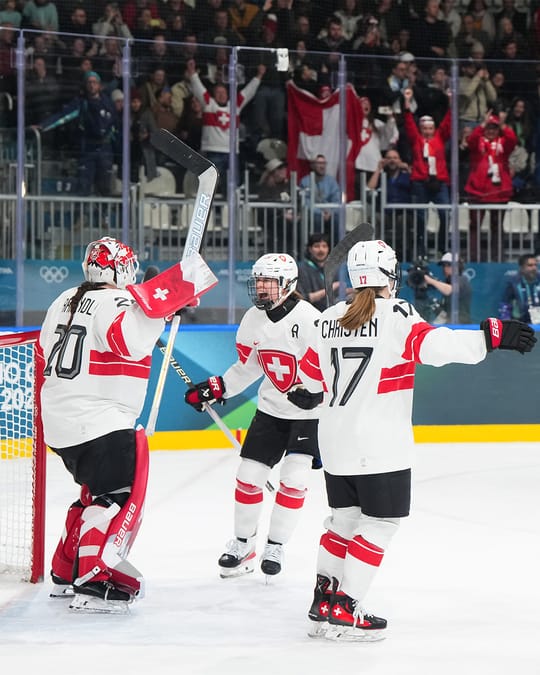
Switzerland vs. Sweden
Kirsten: I said earlier in the tournament that I wished we could see these teams face off, and we’re getting it! I’m really looking forward to this one, I think their respective styles will make for an interesting game.
I’ve mentioned a few times that the Swiss haven’t taken control in any of their matches, even the ones they won. I stand by my assessment: it’s not necessarily pretty hockey, but it’s given them a chance to win every time, and they reinforced that by making it to the medal round and putting themselves in position to threaten Canada with a semifinal upset. I don’t particularly enjoy watching that style of play, but I certainly can’t fault them for figuring out their best chance at success in this tournament and running with it; it's a smart strategy, and it’s not an easy structure to maintain as well as they have. Still, I’m curious if they’ll manage to take the upper hand and show a more well-rounded game in this match.
Sweden, meanwhile, has done quite a good job this tournament of balancing strong defensive play with a speedy, relentless forecheck. I’ll be interested to see if the Swedes can both maintain their defensive framework and force Switzerland to open up its play. The Swiss won their pre-tournament exhibition game over Sweden 4-2, and their consistency and commitment to their structure have been incredibly impressive. If both sides play to their strengths, this one has the potential to be a bit of an unstoppable-force-versus-immovable-object battle of wills.
Nicole: It’s entirely possible (maybe even probable) that this is the more interesting and entertaining medal game. Switzerland showed a really aggressive forecheck against Canada - it’s how they got their goal in the semifinal. I think they can use that really effectively against Sweden. Not only do they not want to give Sweden the chance to carry momentum up the ice, but it’s their best chance to cause mistakes they can capitalize on. Simply put, Switzerland has not been able to score much. They’ve stolen their games with smart defensive play and opportunistic scoring as opposed to solid, consistent offensive pressure. What the Swiss do not want is to get into a 60 minute puck battle along the boards.
Sweden is bigger and more physical with more depth on their bench. They want to force this into a more up and down game where they can play with open ice. If they get pushed to the perimeter by the Swiss defense, they’ll be hoping to get some of their bigger players in front of the net to screen the goalie, draw defenders and if nothing else, look to deflect and tip shots from distance or clean up the puck after saves or blocks. If the game remains tied or close late, I expect Sweden to use their physicality and size to grind on Switzerland. I don’t think that’s the game Sweden wants to play ideally, but it is one they’re willing to play if necessary.
(Photo: USA Hockey/X)