
- One trend that’s been immediately noticeable is a focus on signing players already under contract. I had highlighted this as the optimal strategy in my analysis of the expansion rules – players who are under contract with existing teams can only be acquired by expansion teams during Phase 2 and Phase 4, and in between those, existing teams will have the opportunity to add three more protections. In other words, the top players under contract are only available now, and they know that if they don’t voluntarily sign with an expansion team, they can be selected by one anyways, with their existing contract terms migrating to the new team. If you’re going to have to move, you might as well get some say in where and negotiate a raise. Six of the eight signings formally announced on day one were players already under contract elsewhere – seven of nine if you include Alina Müller, who, per Hailey Salvian, has signed a three-year deal with Hamilton.
- Brianne Jenner’s three-year deal with Hamilton wasn’t a huge surprise, but her farewell message to Charge fans, in which she wrote that she had hoped to stay in Ottawa but “the organization has decided to move in a different direction,” was. While Hamilton is a comfortable landing spot for Jenner, who was instrumental in establishing a culture that led the Charge to two Walter Cup finals, it sounds like Ottawa was unwilling to match the combination of cost plus term that would’ve kept the Forward of the Year finalist in Canada’s capital.
- Seattle’s protection choices were a bit flabbergasting – a lot of attention was paid to the fact that Hilary Knight wasn’t re-signed, but free agents ultimately have, well, agency, so I don’t think that can fairly be held against the Torrent. What surprised me was the choice to leave Cayla Barnes and Hannah Bilka unprotected, and Detroit quickly capitalized on that, signing both. The best explanations I can conjure are either a handshake agreement to somehow compensate for their loss, or that Seattle simply agreed to let both go because they wanted to. Which I think can be a great and humane approach in some circumstances, but when it comes to very livable salaries in a genuinely professional league, letting contracted players who voluntarily signed multi-year deals just a season ago leave in exchange for nothing feels a bit like a flashback to the amateur-hour dealings of the CWHL and NWHL/PHF, to be honest. We’re not talking about players earning league minimum.
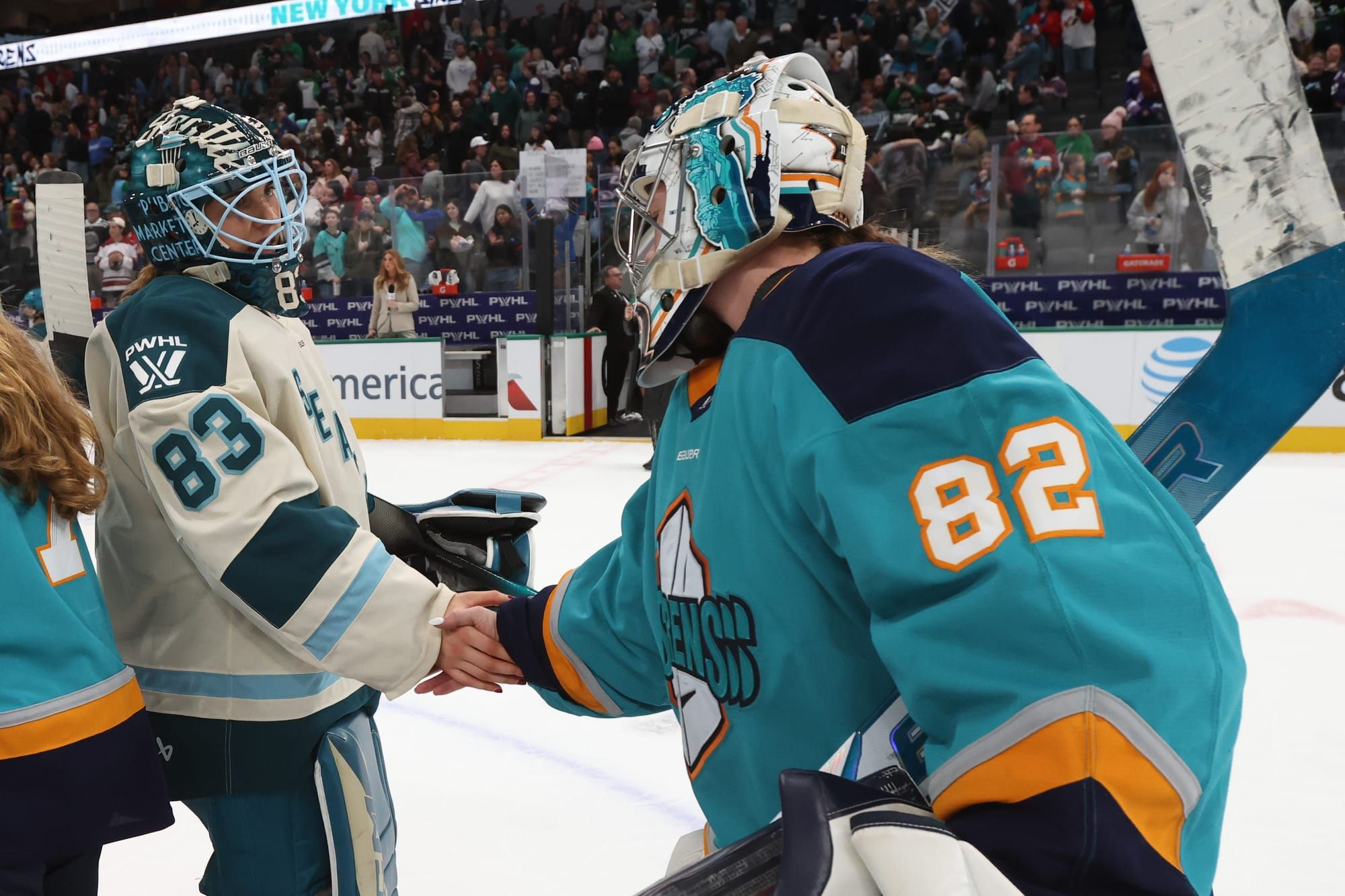
- Personally, I think there are enough 1a/1b-calibre goaltenders declared for the entry draft that signing one (or protecting one that isn’t a Goalie of the Year candidate) wouldn’t have been my priority, but I’m not shocked that Osborne and Schroeder both went. I will be more surprised if we see other goalies signed during Phase 2, especially free agents. Unlike top players already under contract, the free agent goalies available in Phase 2 will also be available in Phase 3, and contrary to other positions, they’ve got a clear incentive to sign with an expansion team: a starting role. A lot of good netminders saw limited minutes in backup roles this year, so the prospect of a starting or tandem opportunity is a compelling draw.
- I admittedly was surprised to see Britta Curl-Salemme signed by Detroit – even from the most cynical marketing-based perspective, I figured a new team wouldn’t want to alienate an important segment of its potential fanbase before even hitting the ice. (If anyone’s not in the loop, prior to being drafted into the league, Curl-Salemme had posted a tweet endorsing transphobic policies against trans women in sports, and liked tweets that were homophobic and racist in nature. More recently, she partnered with FIERCE Athlete, a Christian group advocating to remove trans women from sports. When given an opportunity this past season to correct the record about what she had claimed was a misunderstanding, she doubled-down on her transphobic views. Curl-Salemme has also been subject to more disciplinary action than any other PWHL player for her on-ice conduct, including three suspensions for illegal hits to the head, and has been consistently and intensely booed in all PWHL markets outside Minnesota.)
- The first Expansion Foundational Offer (EFO) went to Daryl Watts, who now has a guaranteed four-year contract worth no less than $418,362.70 (that’s the absolute minimum for a four-year EFO, and it’s safe to presume she was offered more), plus a signing bonus of $20,000. All involved have acknowledged that the eight-year CBA term was agreed to long before anyone realised just how well the PWHL would take off, and there’s a lot of room for improvement, especially in terms of base salaries and the reserve system, but a women’s hockey player just signed a contract worth well over half a million Canadian dollars, in year four of the league. And this time, she’ll actually be paid in money.
- Since three players who were under contract with the Seattle Torrent have already been signed elsewhere, the Torrent cannot lose any more under-contract players during the remainder of Phase 2. Players who are under contract are not available during Phase 3, and each existing team can protect three more players before the start of Phase 4. Seattle can lose at most one more under-contract player during Phase 4. There is no limit on the amount of out-of-contract players any team can lose.
Day One Player Movement
Acquired
Detroit
- F Daryl Watts (EFO)
- D Cayla Barnes
- F Hannah Bilka
- F Britta Curl-Salemme
Hamilton
- F Brianne Jenner
- G Kayle Osborne
Las Vegas
- N/A
San Jose
- G Corinne Schroeder
- D Rory Guilday
Lost
Boston Fleet
- N/A
Minnesota Frost
- F Britta Curl-Salemme
Montreal Victoire
- N/A
Ottawa Charge
- F Brianne Jenner (expiring contract – does not count towards max 3 losses)
- D Rory Guilday
New York Sirens
- G Kayle Osborne
Seattle Torrent
- D Cayla Barnes
- F Hannah Bilka
- G Corinne Schroeder
Toronto Sceptres
- F Daryl Watts (expiring contract – does not count towards max 3 losses)
Vancouver Goldeneyes
- N/A