

The women’s hockey tournament is two days and five games old and there’s already been plenty of interesting outcomes, on and off the ice. Let’s dig into what surprised us, what stood out and what you need to know about what has happened so far.
5 February 2026
This was the first day of the women’s hockey tournament. There were supposed to be four games – key words, supposed to.
Sweden vs. Germany: 4-1 Sweden
Kirsten: I think this one went about as expected. Sweden has a very promising team, as you mentioned in your preview, and their only recent meeting before the Games was at Worlds, where Sweden comfortably won 5-2.
Nicole: I’d agree that this was basically what we expected. Germany has to figure out how to score and they can’t expect Sandra Abstreiter to carry them. I was happy to see Nina Jobst-Smith get the goal for Germany - I called her out in our preview and she is absolutely going to be key to any success they have. But to belabor the point just a bit, it's never great when your only scoring comes from the defense.
Kirsten: I was happy to see Lina Ljungblom make an immediate impact with two goals for Sweden. She had a bad bout of mononucleosis this fall that left her unable to even exercise for several weeks and kept her out of the PWHL season until January, so a pair of goals in her first game in Milan has got to be a big confidence boost. Her return to form is also a good sign for Sweden’s hopes of advancing in the tournament; she’s been one of their top forwards in recent years.
Nicole: Sweden has to be the team most excited for the switch away from weighted groups. There is no doubt there’s a gap between them and Germany, who coming into the tournament I’d have said was the second best team in Group B. We’ll come back to how I was at least a little disabused by that notion already. That being said, they’ve had a chance to move up and displace Switzerland and in the end, they keep losing placement games. I was heartened by their showing here, but they have to be consistent before I’ll really start buying in.
Italy vs. France: 4-1 Italy
Nicole: I think a lot of people came into this tournament having written off Italy without actually doing any research on how they prepared for this tournament. It’s not unusual for a host country to do work to gather experienced players and attempt to put together a viable team, but it sure seems like Italy has been the most diligent and successful at it as anyone we’ve seen in recent years. You really nailed this in your preview - they put together an experienced roster and then did an all-but-centralization residency in Montreal. There was no comparison to the relatively young and mostly domestically-trained French team.
Kirsten: The Italians really were the better hockey team in this one, and while it’s safe to say some people found that surprising, I really don’t think it should’ve been for anyone who’s paid attention to their Olympic preparation. Italy was noticeably stronger on their sticks, which I tend to find is one of the more obvious differences separating top teams from the tier below. The passes are stronger, the receptions more confident, and that allows a team to better maintain possession and impose itself within a game. Italy has that, whereas France was often a bit more tentative.
I read some pre-tournament predictions suggesting that if Italy managed to pull off a win, it would be flukey, but this game proved otherwise. Shots were 46-15; it wasn’t luck. Of course, France is the second-lowest ranked team in the tournament and is making its Olympic debut. I’m not suggesting that Italy won’t be challenged in Group B, but everything we saw in this match was reflective of high skill, solid structure, and good habits, which were evident in the lead-up to the Games. Italy was absolutely dominant against some of the top university teams in Canada, which have historically been competitive in international friendlies with Group B and D1A level opponents.
Nicole: The callout about being strong on their sticks is a really good one. I talked about this a bit in my U18 Worlds coverage, but that was one of those things that was so obviously a difference between the top tier teams and everyone else, particularly on 50/50 pucks. Based on how they looked in their respective first games, Italy may be looking at that no. 2 spot in Group B.
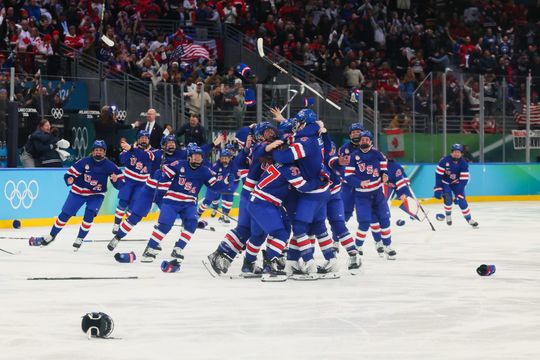
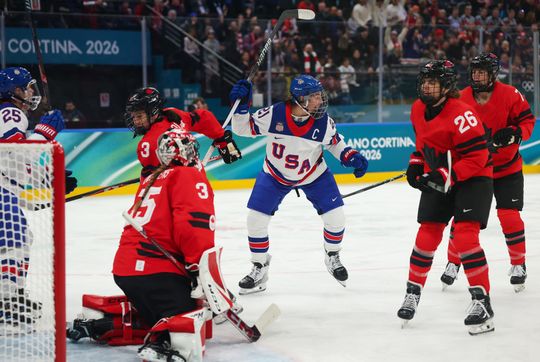
USA vs. Czechia: 5-1 USA
Kirsten: I would say this one overall ended up more or less as expected as well, from my end… One thing I’ve noticed in recent years is that the Czech team brings its very best in the knockout rounds, especially against the U.S., so I’m not sure I’d read too much into the scoreline, either. Is there anything that surprised you, or that stood out?
Nicole: I saw some talk about a slow start for the US, but I didn’t feel like that was much of a concern. It was a given that they’d be a little more careful in their very first game, particularly against a team that could beat them with speed if they overcommitted. With everyone focused on the team’s “youth” before puck drop, it seemed odd to then to expect the 12 Olympic rookies to not need a little bit to find their comfort.
I was really happy to see a nice power play from the Americans early, but the second player advantage was kind of a disaster. That’s definitely something they need to clean up - it’s probably only a small overstatement to say that a lot of their tournament will hinge on special teams.
I’ll go ahead and admit that I wasn’t necessarily sold on Hayley Scamurra’s addition to this roster. It was less about her and more about how I’ve been viewing every forward through the lens of if I would have selected them before keeping Laila Edwards on offense. But I can also admit I’m wrong. It takes a specific type of player to do well in the extra forward role - think Jamie Lee Rattray for Canada in 2022 - and it looks like Scamurra is going to excel there. She’s adaptable and has been able to play well with a variety of different linemates.
And I fully agree with your point on Czechia. They approach tournaments with the intention to learn and grow and peak at the right time. That’s particularly important here where the Group A preliminary games only have a modicum of impact on what happens after.
Kirsten: Yeah, Scamurra really fits that extra forward role well. I envisioned her playing a bit more of a defence-first style in this tournament, but if she can also keep producing on offence, that’s a huge asset to the team.
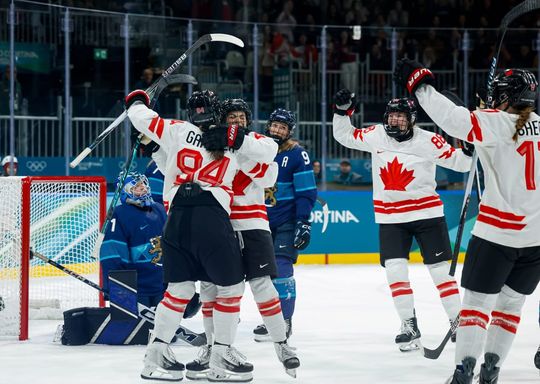
Finland vs. Canada: postponed to 12 February
Kirsten: Just when we thought we were finally through with positive tests being the theme of the Winter Games, we get a norovirus outbreak. At the 2022 Olympics, Canada famously played a full game against the Russian Olympic Committee team while wearing KN-95 masks under their cages. It was looking like we might see a repeat… and we’re still not in the clear. On February 4th, Finnish media revealed that four players had tested positive for norovirus, and several additional teammates had been isolated due to exposure. Their practice session was cancelled as a result. Then on game day, just 10 players showed up to the morning skate, with 13 either sick or isolating. There was initially some speculation about a possible forfeit, but ultimately, the collective decision was to postpone the game.
Finland has been dealing with a team illness, yesterday 6 players were in quarantine in the village after 4 were sick.
— Claire Hanna (@clahanna) February 5, 2026
They cancelled practice Thursday, today only 10 players are at morning skate:
G: Emilia Kyrkko & Anni Keisala
D: Hiirikoski, Yrjola, Laitinen, Rantala
F:… pic.twitter.com/OFc833hz1h
Nicole: I think people assumed this would be a forfeit and I did see that every other team had to agree to the plan that was ultimately agreed upon. The plan to make up the game could mean playing back-to-back games with the second game being the quarterfinal. It will be interesting to see if there’s some massaging of the schedule to ensure Canada and Finland play in the quarterfinals scheduled for Feb. 14 instead of on Feb. 13.
Kirsten: Honestly, I think Canada has an incentive to play this game. A postponement is pretty unusual and the Canadians could’ve tried to force a forfeit instead, but I’m not sure that would’ve been in their best interest. Finland’s results lately haven’t been stellar, and the Finns haven’t seriously challenged Canada in a while. That’s not to say they aren’t capable, but factor in that they’re depleted by illness, and I don’t think Canada has to be tremendously worried about coming away with the three points. Plus, even if the Canadians don’t win, everyone in Group A moves on anyways. In my view, Canada has more to gain from playing this one, even if it costs a rest day to do it. And I have read that Canada, at least, is guaranteed a February 14 quarterfinal, so that would’ve simplified the decision.
In any event, this exact roster has never played a game together, and without a centralization process, they’ve had limited time to build chemistry. All of these preliminary round match-ups are valuable opportunities to get game experience, test things out, and find what works. Going into the knockout stage with one fewer game under their belts would put them at a disadvantage. Even if they end up losing the postponed match, for me that would just be even more proof of why it was worth playing – better to find out what’s wrong in the group stage, when you’ve still got time to fix it, than in a semifinal. How do you think this might impact Finland’s tournament?
Nicole: I think the biggest concern for Finland is less about the postponement and possible back-to-back games and more about the health and stamina of the players who are sick. There’s basically no way they don’t come out of this absolutely wiped and exhausted. They’ll likely have to play with a short bench if they do manage to have enough players healthy for their second game. And the recovering players are going to be weakened and not at their best when they do return. And they’ll likely be playing games with less rest than was initially planned. It all combines to put Finland at a disadvantage.
6 February 2026
Day two of the tournament featured two matches, followed by the Opening Ceremony.
France vs. Japan: 3-2 Japan
Nicole: Japan probably would have liked to win this with a bit more cushion and maybe also should have. If they’re going to make any splash at this tournament and prove they’re a team to contend with, they have to play a complete, 60 minute game. They got lax at the end of this game.
Kirsten: This one had a pretty brutal ending – it was tied 1-1 until Makoto Ito put Japan ahead with under five to go. Japan added an empty-netter just over a minute later, then Japan took a holding penalty and Gabrielle De Serres scored for France (fun fact: she’s Canadian, with a French grandmother). Without the empty-netter, that power play goal would’ve tied things up, but alas. This was a better performance for the French, but unfortunately, I think they needed the win here to have a chance at advancing. If they play to their potential, they could beat Germany, but losing the head-to-head against both Italy and Japan means a top 3 finish is nearly impossible for France unless it can also pull a point out of Sweden.
Nicole: It felt like a solid first game for Japan. Importantly, no one player had more than a point. While I do think they’ll need a player or two to step up and be their go-to in the toughest moments, I also think it says good things for them that they’re not relying on any one player to generate offense. They have to find some more discipline - as you mentioned, that late penalty could have really flipped this game and as we saw in the second game on Friday, things can really flip in overtime and a shootout.
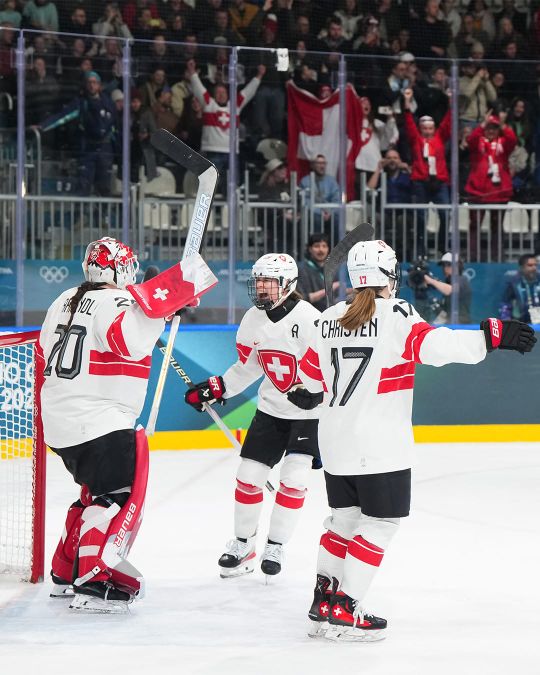
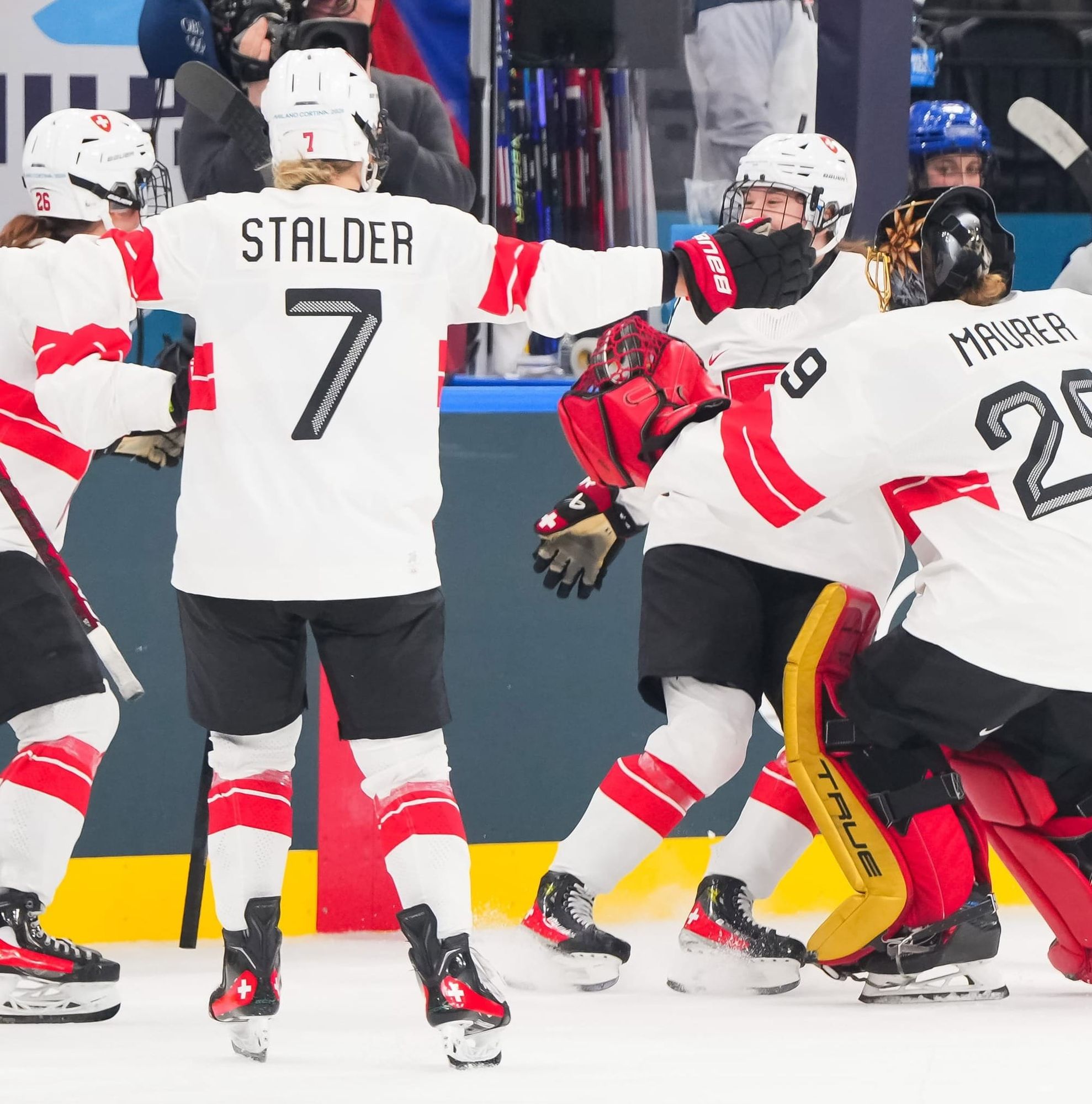
Czechia vs. Switzerland: 4-3 (SO) Switzerland
Kirsten: Czechia’s certainly been the better team over the past several years and has been undefeated against Switzerland for quite some time, but all three prior meetings between these teams this season were 1-goal margins, including one game that took overtime. So the Swiss have certainly been trending in the right direction.
Nicole: I have to say I was surprised to see how close the recent games have been between these teams. Mentally I’ve had Czechia as a much more talented team and that makes this result pretty surprising to me. I didn’t get to pay as close attention to this game as I would have liked. How did Switzerland manage to get this result?
Kirsten: Honestly, from start to finish I would describe this game as chaos hockey. It was extremely back-and-forth, and often felt a bit frantic. These teams both have some highly skilled players, but neither side really managed to impose its style on the other. I do think Czechia is at its best when playing with possession, so even though the Czechs were leading for most of the game, disrupting their flow was important for Switzerland’s success.
Overall, the stars were the stars in this game, and I think most readers will be familiar with the goal-scorers. But the hero wound up being 20-year-old Ivana Wey, who had an assist before scoring twice in the shootout, including the game-winner. In your preview, you had singled her out and mentioned that you’ve been a big fan of Wey since seeing her at U18 Women's Worlds a few years ago. What is it about her game that stands out to you?
Nicole: One big thing is that she wasn’t on my radar at all at the previous tournament and then was immediately impactful and crucial to Switzerland in the first game of the next year’s tournament. Overall that 2024 tournament was something to forget for the Swiss team, but Wey was by far their best player there - and she basically earned a chance with the senior team with her performance. Switzerland is generally not one of the more physical teams at the U18 level, but Wey was shoulder to shoulder with everyone. She won board battles, she stood up opponents at the faceoff dot and she used her size to win the puck before using her speed to take off in transition.
As you mentioned for Czechia, possession is so important and Wey’s ability to reliably win the puck made such a difference for Switzerland. When you watch 21 games in a week, it can be easy for all of it to run together, but Wey just stood out from the crowd. I sometimes talk about players in college who just seem to be able to will their team to victory - like they refuse to let their team lose. Wey had that kind of presence. You always knew when she was on the ice. She plays with confidence that only keeps growing. She’s planning to play at Northeastern next season and I can’t wait to continue to watch her develop.
And then…
Kirsten: A few hours postgame, the Swiss federation announced that one player had tested positive for norovirus. Per the federation, the case was detected overnight, the player was isolated in a single room, and the official test result came in shortly after the match. The entire roster was then isolated and did not attend the Opening Ceremony. The federation said that the player in question was no longer experiencing symptoms, and that at the time of publishing, no other players were symptomatic. Goaltender Andrea Brändli was the only Swiss player not dressed for the game.
Nicole: Well this isn’t the reason I thought Saskia Maurer would be impactful for Switzerland, but I’m glad I called out how important she would be to the Swiss team after both the win and this news.
Kirsten: I definitely feel bad for the players missing out on the Opening Ceremony, especially given that even many of the returning Olympians have never had a typical Olympic experience, what with the Covid-19 protocols that were in place for Beijing 2022. But I’m glad they’re taking precautions. Meanwhile, many of the Finnish players who had been in isolation the day before (either because they were symptomatic or exposed to someone with symptoms) were in attendance, and I’m curious about the Games-wide medical standards in place to prevent the Olympics from becoming a superspreader event. Four years later, I almost can’t believe we’re having to revisit all of these same questions…
YLE has reported that, per Team Finland’s chief physician, players who have been ill are being quarantined until 48 hours after their last symptom. Those who were exposed are being isolated for 24 hours, after which the quarantine is lifted if they don’t develop symptoms. She mentioned that ideally, isolation periods would be longer, but they’re trying to strike a balance between taking precautions and allowing asymptomatic athletes to train.
Nicole: I can’t imagine this is the end of the illness’ impact on the tournament and as you mentioned, there is a likelihood this will affect other events as well. I appreciate that Switzerland was proactive in isolating the sick player even without a positive result. We’ve barely started and there have already been a number of decisions made by folks that have left me scratching my head.
Kirsten: I’m very curious how much is being left to individual federations to decide, as opposed to having a universal protocol. One thing about Beijing 2022 is it felt like everyone knew exactly what the hypothetical scenarios were; here, it’s seeming like a bit of a choose-your-own-(miserable)-adventure. Obviously there’s a collective interest in ensuring this doesn’t spread, but it’s strange in comparison to all the health and safety efforts (and, at times, security theatre) of the last Winter Games.
Nicole: Yes, exactly. There are a lot of holes in the information we have. I want to believe that people are making choices in the best communal interest, but I’m also an American so I don’t actually believe that people do that anymore? It’s also difficult because a lot of the information has been in Finnish, so we’re relying on translations and a hope that the journalists writing the articles are doing their due diligence.
Kirsten: Ultimately, I do think the overall impact of the disruption on the tournament will be interesting to track. There’s obviously the direct impact of illness on anyone affected, which is unfortunate, and not what anyone wants affecting the Olympic Games. But we hear all the time about top teams excelling through their adaptability, and particularly for teams that haven’t been seriously ill, the uncertainty around the schedule seems like the type of low-stakes adversity that can foster confidence in a group’s ability to tackle challenges. I have to imagine that potential psychological advantage only works if the players stay healthy, though.
Looking ahead
USA is set to play Finland on Saturday, and Canada’s scheduled to face Switzerland. The Finnish team is reportedly doing better and expects to play; the Swiss are hoping that no one else will show symptoms. Neither of the frontrunners for Olympic gold can be keen to risk norovirus exposure, so it’ll be interesting to see how things are handled. We’re also running out of timeslots to squeeze in more postponements, so if further issues arise, we might end up seeing some forfeits instead.
Saturday’s schedule for Group B, meanwhile, features two very interesting games (and, as of yet, no confirmed norovirus). Germany and Japan are facing off, and the winner will have an advantage in the battle for the quarterfinals. Meanwhile, host Italy plays Sweden, which is the class of the field in this group. How the Italians fare against the Swedes could be revealing.
(Photo: Swiss Ice Hockey/X)